Umami, appetite, and sodium reduction — a pilot workshop for dietitians and nutrition professionals
A workshop for people who design what others eat
A meal can be nutritionally sound and still not quite work. The plan is right on paper. The salt comes down and something goes flat. The protein is adequate and the appetite is not. Something outside the calculation decides the outcome.
Umami is one way of understanding that something — though not, here, as an ingredient. Cheese, cured meat, stock: umami usually arrives with salt attached, which is exactly why the standard advice to add umami rarely survives contact with a sodium target. What remains once you take the salt away is not a shopping list. It is method.
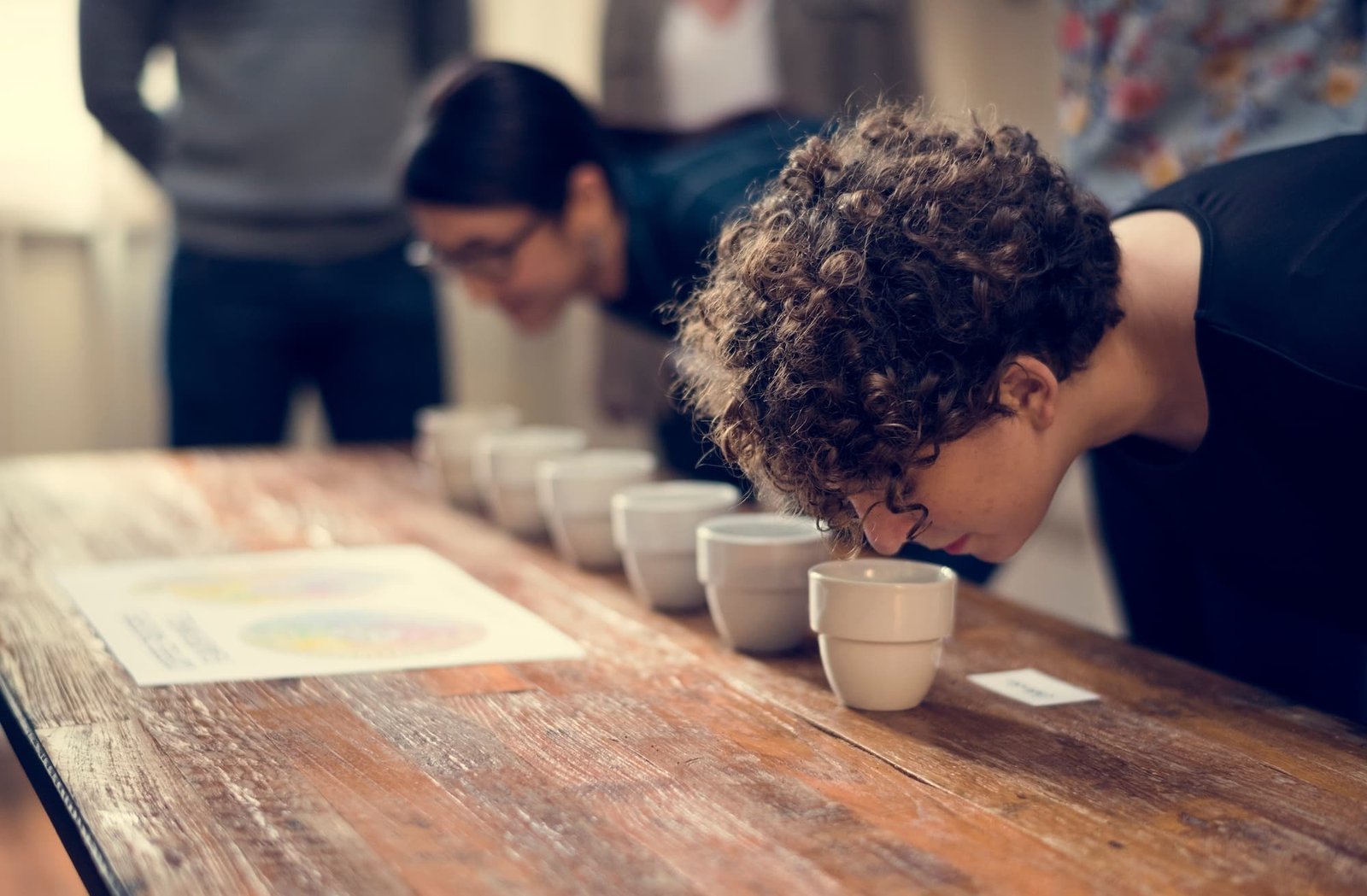
That is what this workshop works with. We start from the physiology — chewing, saliva, and how taste actually reaches you — and everything is tasted before it is discussed.
What will change after this experience
- A second way of assessing a dish — perception, alongside the analysis you already trust
- Why some combinations satisfy more than their ingredients predict, and how to build that on purpose
- An approach to sodium reduction through technique rather than ingredients — including where it stops working
- Language for what you currently record as intake: the point where taste, not nutrition, decided what was left
- One of your own cases redesigned, and a way to find out whether it worked
Five questions
Rather than a curriculum, the session moves through five questions. Each one is tasted before it is discussed.
1.Attention — What does umami actually do?
Umami on its own, with as little around it as possible. Where it appears, how long it stays. And where it happens: taste needs saliva, saliva needs chewing — which is why the same dish does not arrive the same way for everyone at the table.
2.Composition — Why do two ordinary ingredients together taste better than either one predicts?
The result is not their sum but something closer to their product. What produces it, and what concentrates it: extraction, reduction, browning, fermentation, time.
3.Balance — Can umami help us do more with less?
Sodium reduction, with the obvious problem in the way: the ingredients richest in umami are usually the salty ones. So the question is method — how umami is drawn out and combined without bringing salt along. We look at how far this reaches, and where it only appears to.
4.Appetite — What decides whether nutritious food gets eaten?
This is the part where we think together. Cases where flavour, not nutrition, decided the outcome — high-protein products that are complete and hard to finish, texture-modified food where flavour recedes as texture is corrected. Participants bring their own.
5.Designing Satisfaction through Umami — How could this meal work better?
This is the part where you work. One real case from your own practice, redesigned with what the first four questions provide, then shared. A redesigned meal is a hypothesis until someone eats it — those who wish to are invited to try it and report back.
Who is this for
- Dietitians and nutritionists working with real patients, clients or menus
- Professionals working on sodium reduction, appetite loss, or food acceptance
- Care, clinical, school and institutional catering teams
- Product and menu developers working under nutritional constraints
Clinical knowledge is assumed. Culinary training is not.
A note on the pilot
This programme is currently in pilot. The five questions are fixed; their depth and emphasis are being shaped together with the first groups of participants. Feedback is collected at the end of each session and informs the final version directly.
Practical information
| Item | Details |
|---|---|
| Format | In-person, with a short tasting |
| Language | English (Dutch materials on request) |
| Participants | Small group |
| Status | Pilot programme |
| Dietary considerations | Please indicate in advance |
| Dates & Place | 2nd Sept. 2026, 6pm-8pm / Maastricht city centre, NL |
| Fee | See the registration form |
Facilitator
Kumi Matsushita is an Umami Expert / Curator based in the Netherlands.
She writes and speaks on food, culture and taste through umami. She works with cultural institutions and food producers across Europe. Her interest is in how flavour is built — and, increasingly, in what that means for people who build it under constraints.