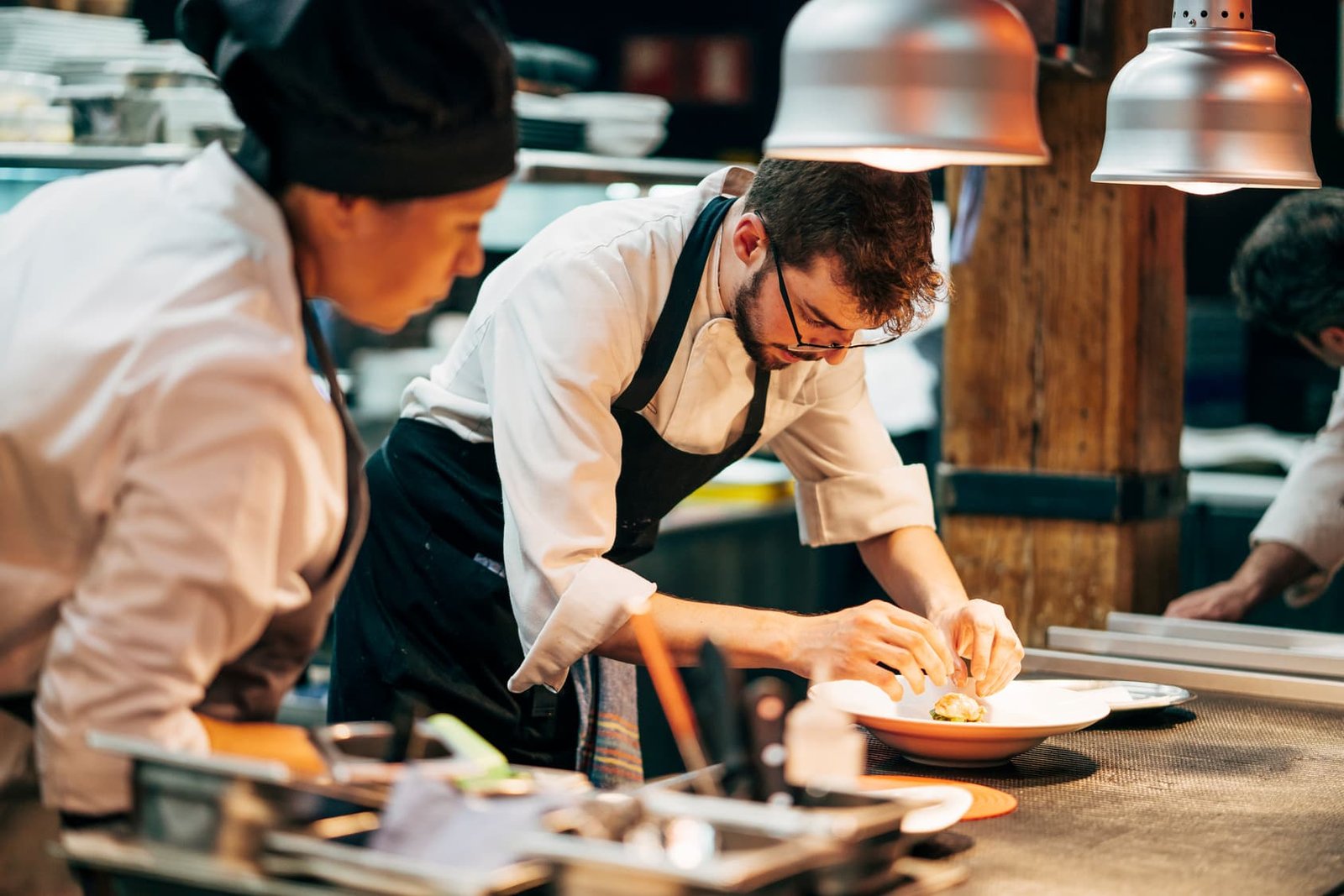
You can taste umami. Can you locate it?
A structured workshop for chefs and food professionals. Learn what umami actually is, taste it under controlled conditions, and learn to read where it comes from in your own cooking.
The problem
Umami is easy to recognise as an idea. It is harder to isolate on a plate.
Richness, roasted flavour, saltiness, fat and aroma can all contribute to an experience we might casually describe as umami. But they are not the same phenomenon.
That distinction matters when you decide what to change next. If richness, aroma, saltiness or texture is being interpreted as an umami problem, adding another source of umami may not address what you are actually trying to change.
This workshop starts from the assumption that the vocabulary itself needs repair.
What we do
- Ground it.
What umami is — physiologically and chemically — and where it occurs across foods and cuisines. Then, more importantly, what it is not. Kokumi, savouriness, roasted flavour and “richness” are separate, researched phenomena that are routinely collapsed into one word. We separate them, with sources. - Taste it.
Guided tasting under controlled conditions, including synergy. No scoring, no judgement of your palate, no right answers. The value is in the comparisons — deliberately constructed pairs that isolate one variable at a time, which almost nobody sets up for themselves in a working kitchen. - Read it.
A structured set of questions for asking what actually happened to umami during cooking — and, the step most often skipped, whether umami was the relevant variable at all. The framework is taught in the session. - Apply it under constraint.
The real test isn’t an unlimited kitchen. It’s when a familiar solution becomes unavailable — reduced-sodium reformulation, plant-forward menus, ingredient substitution. We work through how the reading changes what you’d do next.
Who it’s for
- Culinary schools and instructors
- Restaurant and kitchen teams
- Product development and R&D teams in food companies
- Nutrition, hospitality and food-education professionals
No science background required. Curiosity about your own cooking is enough.
Format
- On-site, at your kitchen, school or facility
- Delivered in English
- Duration and group size arranged per booking
- Tasting materials and reference notes included
About
Kumi Matsushita is an umami researcher based in the Netherlands.
She works between the kitchen and the literature: examining research to distinguish what is established from what is simply repeated, then building comparisons that isolate one variable at a time, so professionals can taste the difference and examine what changed.
Her work is to read cooking through umami — including recognising when umami is not what needs to change.